Minneapolis Police - Early History

In the 1800s, the City of St. Anthony and Town of Minneapolis were first adequately served by an appointed city marshal based out of St. Anthony who was assisted by constables. Vested with the power of arrest, they rarely used it. Criminals sentenced would be sent to Ramsey County Jail or the Stillwater Penitentiary until the Hennepin County Courthouse and Jail was built in 1857. When the two cities merged and incorporated as Minneapolis in 1867, Mayor Dorilus Morrison immediately appointed H. H. Brackett as the first police chief. With six patrolmen, the new Police Department of Minneapolis served a population of about 5,000 people. In 1884, the force numbered 100 men and Shingle Creek workhouse was completed.
In 1887, by act of the new Minnesota Legislature and accorded by the Minneapolis City Council, the Board of Police Commissioners was appointed. Vesting all control of the force to the Board, it was an attempt to thwart the corrupt Mayor "Doc" Ames who had replaced the police force with crooks. The Board was short-lived for three terms until it was abolished in 1890 and a new mayor was elected. Military titles were also abolished. By then the city grew to 200,000 people with 200 officers on a budget of $209,278. Patrols were done on foot and by horseback with headquarters at. By 1909, the department added motorcycles, fingerprinting, and utilized telephones.
In 1887, by act of the new Minnesota Legislature and accorded by the Minneapolis City Council, the Board of Police Commissioners was appointed. Vesting all control of the force to the Board, it was an attempt to thwart the corrupt Mayor "Doc" Ames who had replaced the police force with crooks. The Board was short-lived for three terms until it was abolished in 1890 and a new mayor was elected. Military titles were also abolished. By then the city grew to 200,000 people with 200 officers on a budget of $209,278. Patrols were done on foot and by horseback with headquarters at. By 1909, the department added motorcycles, fingerprinting, and utilized telephones.
Minneapolis Police History From 1930's On

The Great Depression-era of the 1930's saw the Police Department heavily involved in quelling labor disputes and battling gangsters and the effects of Prohibition. The infamous Barker-Karpis gang killed two of MPD's finest in a sensational gun battle outside the Third Northwestern National Bank in Northeast Minneapolis. The years during World War II saw 117 MPD officers fight for their country to overthrow the grip of the Axis Powers. The 1950's brought population growth, stability and prosperity. The city's population increased to over 500,000 in 1950 with nearly 600 sworn officers. The "Drunkometer," forerunner of today's intoxilyzer, was first used in 1952. The 1960's brought change, turmoil and reform. Major riots along Plymouth Avenue resulted in the creation of the Community Relations Division and the Model Cities Precinct in 1970. The 1970's saw increased reliance on federal grants and the first use of mobile digital technology (MDT's) in squad cars.
The 1980's and 1990's saw community-oriented policing evolve from an effort to get closer to the community to today's fully staffed Community Crime Prevention/SAFE Unit. Several national studies were done in Minneapolis, with its officers playing crucial roles.
Today, the MPD has approximately 800 sworn officers and 300 civilian employees, all of who are fully dedicated to ushering in the 21 st century with their commitment to community-oriented policing and the people they serve.
Minneapolis in the 90's

Gangs and homicides Tensions among gangs following the acquittal of officers in the Rodney King beating trial in Los Angeles led to one of Minneapolis' darkest moments. On September 25, 1992, Officer Jerome (Jerry) Haaf was taking a break at the officers' popular Pizza Shack restaurant in Phillips and was shot behind the back by two Vice Lord gang members. The investigator with him was also wounded. Haaf died from his wounds at Hennepin County Medical Center and the members were later caught, convicted and sent to prison. Chief John Laux suggested the murder was possibly retaliation for an earlier incident in which Metro Transit Police removed a blind black man who did not have bus fare. At a community meeting earlier in the evening at North Community High School, gang members interrupted calling police brutality and insensitivity. A Vice Lord leader under the guise of a non-profit group called United For Peace which called for Minneapolis to be a sanctuary for gangs, was suspected of orchestrating the murder. Though not convicted of Officer Haaf's death, the leader was sent to prison in excess of 20 years for a separate incident. The group's message had exacerbated a real ongoing issue of police brutality in the latter century. Former police chief Tony Bouza who oversaw the department in the 1980s called the force at the time "brutal." Mayor Sharon Sayles Belton, an African-American herself, stated in 1994 that excessive force was a problem.
In 1995, Mark Koscielski, a gun shop owner in present day Midtown Phillips coined the term "murderapolis." His T-shirts featuring the derisive term were quoted in a New York Times article. Murders had indeed peaked that year and the department sent three officers to New York City to study the Broken Windows crime-prevention program implemented by then Mayor Rudy Giuliani and Police Chief William Bratton. The officers returned to implement a new policing strategy, the Computer Optimized DEployment - Focus On Results (CODEFOR). A computer-based system, the strategy involves every unit of the MPD from patrol to special units to identify and concentrate policing on hot spots of crime. As technology has improved, the department continued to collect and increase reliance on statistical and data-based information.
In 1995, Mark Koscielski, a gun shop owner in present day Midtown Phillips coined the term "murderapolis." His T-shirts featuring the derisive term were quoted in a New York Times article. Murders had indeed peaked that year and the department sent three officers to New York City to study the Broken Windows crime-prevention program implemented by then Mayor Rudy Giuliani and Police Chief William Bratton. The officers returned to implement a new policing strategy, the Computer Optimized DEployment - Focus On Results (CODEFOR). A computer-based system, the strategy involves every unit of the MPD from patrol to special units to identify and concentrate policing on hot spots of crime. As technology has improved, the department continued to collect and increase reliance on statistical and data-based information.
Precincts:Inspector Eddie Frizell commands the 1st Pct. The 1st Precinct is located at:
19 North 4th Street, Minneapolis, MN 55401 (612) 673-5701 Fax (612) 370-3900 Inspector Bryan Schafer commands the 2nd Pct. The 2nd Precinct is located at: 1911 Central Avenue N.E. Minneapolis, MN 55418 (612) 673-5702 Fax (612) 370-3885 Inspector Lucy Gerold commands the 3rd Pct. The 3rd Precinct is located at: 3000 Minnehaha Avenue South, Minneapolis, MN 55406 (612) 673-5703 Fax (612) 370-3880 |

Minneapolis Police Precincts
|
Precincts:
Inspector Michael Martin commands the 4th Pct. The 4th Precinct is located at:
1925 Plymouth Avenue North, Minneapolis, MN 55411 (612) 673-5704 Fax (612) 370-3878 Inspector Matt Clark commands the 5th Precinct. The precinct station is located at: 3101 Nicollet Avenue South, Minneapolis, MN 55408 (612) 673-5705 FAX (612) 370-3879 Chief Janee Harteau 350 South 5 th Street Room 130 Minneapolis, MN 55415-1389 (612) 673-3559 Fax: (612) 673-2613 |
CLICK HERE FOR LIVE MINNEAPOLIS POLICE SCANNER AUDIO
Line of Duty Deaths: 47
Animal related: 1
Assault: 3
Automobile accident: 1
Drowned: 1
Gunfire: 27
Heart attack: 3
Motorcycle accident: 5
Struck by vehicle: 4
Vehicle pursuit: 1
Vehicular assault: 1
Assault: 3
Automobile accident: 1
Drowned: 1
Gunfire: 27
Heart attack: 3
Motorcycle accident: 5
Struck by vehicle: 4
Vehicle pursuit: 1
Vehicular assault: 1
Minneapolis Police Dept. Fallen Officers
Minneapolis Police Officer Jerry Haaf

Appointed April 23, 1962
Died September 25, 1992
30yrs, 5mos. and 2days of helping others ended at 1:45a on Sept. 25th shot in the back as he took a break.
As the murderers fled, A retired Minneapolis Officer and other patrons went to Jerry's aid. Moments later police officers began arriving and started administering first aid. Jerry was taken to HCMC where he succumbed to his wounds at 3:40a. His shift wound have ended at 3.
Why did Jerry die? Solely, because he was a police officer.
Jerry Haaf was 53 years of age. He had served his country in the US Air Force and was going to retire from the Mpls PD in a few months. Jerry was survived by his wife, Marilyn, a daughter, two sons, grandchildren, and many other family members and close friends.
The funeral for Jerry was a beautiful sight. 1,200+ officers from the five-state area attended along with hundreds, upon hundreds, of citizens along the procession route paying their respects to Jerry. At the cemetery the Bag Pipes wailed and Taps was played and a good man was laid to rest.
Minneapolis Police Officer Melissa Schmidt

Officer Melissa Schmidt was shot and killed after she and her partner responded to a call shortly after 7:00 pm reporting a woman with a gun at a public housing complex.
Contact was made with the 60-year-old female suspect and while the officers were questioning her, she said she needed to go to the bathroom. Officer Schmidt escorted the woman to the public restroom in the lobby of the building. While in the restroom, the woman produced a handgun and opened fire, striking Officer Schmidt in the abdomen below her vest. Officer Schmidt was able to return fire and killed the suspect.
Officer Schmidt was a United States Marine Corps veteran and had served with the Minneapolis Police Department for over 6 years. She was assigned to the Public Housing Unit. Officer Schmidt is survived by her parents and brother.
Minneapolis Police Officer Ward Canfield

Officer Canfield along with his partner Fossum were on patrol in the Uptown area of Minneapolis when they spotted a car make an illegal u-turn. A radio check revealed the car was stolen. Fossum, who was driving the squad car, turned on his lights and siren to signal to the other car to pull over. Instead, the car sped away. Fossum and Canfield chased the car through residential streets. Gunshots came from the chased car. Canfield returned fire.
Attempting to make a sharp turn, the fleeing car hit the rear of a parked car. Two men jumped out of the chased car, with guns in hand. Fossum and Canfield, who had followed closely, exited the squad car and approached the two men. One of the men fired at Fossum, hitting him in the head. Fossum fell to the pavement; he was fatally injured. Canfield pulled the trigger of his shotgun, but it did not fire. Another man in the stolen car shot at Canfield, hitting him in the stomach.
The man who shot Fossum got in the parked car he had hit. One of his accomplices joined him. The car's bumper was locked with their original car. Unable to dislodge the cars, the men drove both of the cars forward, running over Canfield and dragging him 20 to 30 feet.
The two men got out of the car and fled on foot, catching up with their other accomplice, who had fled. The three men stole another car at a gas station, and then another car. In the second instance, they took a hostage - the driver's wife.
The three men abandoned the third stolen car an hour later and transferred their hostage, now blindfolded, into another car. They released her in an alley a short time later. She went to a house and called the police.
An intense manhunt was under way. For the next month, a nationwide alert was out for the three suspects.
Four weeks after Fossum's killing, Anoka County Sheriff's deputies encountered the three men; another chase with gunfire took place. The three suspects took a hostage again, forcing him to drive them. Eventually, hundreds of law-enforcement officers from Minneapolis, St. Paul, surrounding counties, western Wisconsin and State Patrol were involved in the pursuit.
At some point during the chase, the car hit water, and the suspects fled on foot. When deputies caught up, the suspects used the hostage as a shield. One of the suspects shot the hostage. After the hostage was shot, the three suspects fled on foot into a swamp. The deputies fired at them.
Two of the suspects were found dead in the swamp. The third was found with a self-inflicted gun wound.
The surviving suspect confessed to Fossum's murder, Canfield's wounding, kidnapping the woman, and kidnapping and murdering the hostage one month later. The suspect was tried in Hennepin and Anoka County Courts for murder and kidnapping, and was sentenced to a combination of life and long-term sentences at the Minnesota Correctional Facility in St. Cloud. He committed suicide a year later.
Canfield, a father of three, survived his injuries. He had more than 40 surgeries, including amputation of his right leg. He returned to limited police work a few years later but ended up resigning from the department. He later served on the Civil Service Commission for the city. He died as a result of his injuries sustained from this incident.
Minneapolis Police Officer Lisa Kern

Officer Kern died of an aneurysm while on duty at the 5th Precinct.
Minneapolis Police Officer Paul Moen

Officer Moen suffered a fatal heart attack shortly after he subdued a suspect in a domestic disturbance. Officer Moen collapsed when he attempted to stop one of the men from attacking another officer.
Minneapolis Police Officer David Mack

On December 13th, 1979, officers went to 2807 Pillsbury Avenue South to execute a search warrant for stolen property. Officers also had information that there were possible narcotics involved. Officers knocked on the door and rang the doorbell, but when no one answered, they decided to do a forced entry and entered the home announcing their presence. Although several times they had announced, "police officers, we have a search warrant," several shots were fired out of the darkness. Sgt. Bob Skomra was shot in the abdomen and left the residence. Other officers radioed for help the same time the suspect was on the phone with the police saying he had just shot someone breaking into his home. The officers convinced the suspect they were the police and he put down his gun and exited the home. The officers then found Officer David Mack lying on the kitchen floor with gunshot wounds to the neck and abdomen.
Two years after the shooting, Mack came out of a coma, but lived as a quadriplegic and communicated with the help of a spelling board. He started running a high fever and died from infections at HCMC on Sunday, November 2, 1986, at 6:55 p.m., seven years after the shooting. The medical examiner ruled his death a homicide.
The suspect, Riley Housely III, was now free. He was convicted of first-degree assault, but that was overturned in 1982 when the Minnesota Supreme Court found insufficient evidence to prove that Housely hadn't shot in self-defense. There was virtually no chance he would be tried for murder because of double jeopardy.
Officer Mack was 43 years old. He was survived by his wife, Marlies, and sons Dennis, 21, and Tom, 15. He had been with Minneapolis police since 1968. His funeral was held at St. Anthony Padua Church in Northeast Minneapolis on Tuesday, November 4th. He was buried in Fort Snelling National Cemetery.
Minneapolis Police Officer Richard Miller

On Thursday, August 25th, Officer Richard Miller went to investigate a report of a stolen vehicle parked at 16th and Gerard Avenue North. He arrived at 5:12 p.m. and met with the reporting party at 15th and Gerard. She told him that her friends' red Toyota pickup had been stolen three weeks ago and was now occupied by three people. Miller called for back up, but did not wait for their arrival before approaching the stolen vehicle. As he approached the passenger side of the vehicle, he spoke with a female. The male driver got out, walked around the truck and shot Miller three or four times in the chest and wrist, using a stolen police .357 revolver. As he fell back toward his car, Miller returned fire, but did not hit anyone. Three suspects then fled from the truck. It was unclear if Miller radioed for help or if a passerby used his radio. When his backup arrived, Miller was found lying between his car and the truck. At 5:47 p.m. he was pronounced dead at Hennepin County Medical Center.
Within four hours of his death, officers began picketing the use of one-man squad cars that had been ordered by Chief Bouza.
Reverend Raymond Blaylark met with the 17-year-old female suspect and her mother. They then met with the suspect that shot Officer Miller in Minneapolis. Blaylark then escorted them all to the police station to surrender. The suspect who shot Miller was Isaac Brown, 23. He was found guilty of first-degree murder and sentenced to life in Stillwater Prison. He could not be released until 2081. The other male occupant in the truck, identified as Roberto Brown, 19, was not charged. The 17-year-old female was offered immunity in exchange for testifying against Isaac Brown.
Officer Miller was 59 years old and was scheduled to retire in about 18 months. He was 41 years old when he joined the department 18 years previously, started April 1st, 1963. He was survived by his wife, Lea, and two children.
Minneapolis Police Officer Michael Cassman

On Friday, May 4th, at 11:30 p.m., Officer Cassman was off-duty at the Tempo Bar and Restaurant at 2027 East Franklin Avenue. After getting into an argument with another patron, which soon turned physical, the patron pulled a gun. Cassman also pulled his gun and they both fired. Cassman was hit twice; the other man was not hit. Another patron tried to revive Cassman with CPR, but he was dead on arrival at Hennepin County Medical Center. The suspect was taken into custody outside the bar.
Officer Cassman was 33 years old and had been an officer for 11 years. He was last stationed at the 6th precinct at 2639 Nicollet Avenue. His brother, Mark, also worked out of this precinct. Mark was also present when Officer Partridge was killed in 1976. In addition to his brother, Officer Cassman was survived by his mother, Mildred, and four sisters: Patricia Toensing, Carol Dalquist, Janice Kolisnyk, and Nancy Cassman, and friend, Linda Brown. His funeral was held at Bethlehem Lutheran Church at 4100 Lyndale Avenue South on Wednesday, May 8th and he was buried in Lakewood Cemetery.
Officer Cassman was 33 years old and had been an officer for 11 years. He was last stationed at the 6th precinct at 2639 Nicollet Avenue. His brother, Mark, also worked out of this precinct. Mark was also present when Officer Partridge was killed in 1976. In addition to his brother, Officer Cassman was survived by his mother, Mildred, and four sisters: Patricia Toensing, Carol Dalquist, Janice Kolisnyk, and Nancy Cassman, and friend, Linda Brown. His funeral was held at Bethlehem Lutheran Church at 4100 Lyndale Avenue South on Wednesday, May 8th and he was buried in Lakewood Cemetery.
Minneapolis Police Officer George Partridge

After working the 3-11 shift, Officer George Partridge and two other officers went to Mr. Nibs Bar at 26th Street and 26th Avenue South. At closing time, as Partridge and his friend, Officer Mark Cassman, left the bar and went to their car, a woman approached them and wanted to talk to them. As the officers were talking to the woman, an employee and the suspect came out of the bar, got in their car and were going to drive away but couldn't get around Partridge's car and words were exchanged. When Partridge got out of his car and told the other driver he had enough room to go around, the suspect got out of his car and started shooting at Partridge. Cassman returned fire, hitting the suspect in the upper arm and left shoulder area. The suspect then drove around the block, then returned to the scene and surrendered to police. He was then taken into custody and transported to Hennepin County Medical Center for treatment. The suspect, W.C. Martin, 34, was a cook at Mr. Nibs. He was indicted by a grand jury for first-degree murder.
Officer Partridge was 24 years old and had been with the Minneapolis Police Department since 1973. He was survived by his 5-year-old daughter. Because Partridge was not married to the mother of the daughter, the city attorney's office rejected a death benefit claim of $25,000 for his daughter. They claimed Partridge was in a common-law relationship so the child's mother would get no benefits. If the child were proven to be his, and that he was supporting it and not AFDC, then the claim would be paid. The police federation appealed the decision.
Officer Partridge's visitation was held at Welander-Quist West Chapel on Thursday and prayers on Friday. He was buried at The Catholic Cemetery in Onigum, Minnesota.
Minneapolis Police Officer Inno Suek

Lieutenant Inno Suek was off duty, but he was working part time as a security guard at Hums Liquor Store, 2125 Lyndale Avenue South, on Saturday, September 30th, around 10:00 p.m. when two suspects entered the store. One suspect walked up behind Suek and pointed a gun at his head. As Suek turned around and fought over the gun, he was shot in the chest with a .38-caliber handgun. He died at the scene. The suspects then took Suek's gun and fled without the money.
The three suspects were arrested on Tuesday, October 3rd, at Fair Oaks Motel at 24th Street and Third Avenue South. Three guns were also recovered; two .38 caliber's (one being Suek's), and a larger automatic. Frank Gavenda was convicted and sentenced to life for Officer Suek's murder. He had previously been to prison, but was paroled even though he had made one successful escape attempt.
Lieutenant Suek was 41 years old. He worked for the department since June 18th, 1956. He originally started as a patrol officer with the Bryant Street Station and was later transferred. He made sergeant in 1966 and returned to the Bryant Station. He again left there when he was promoted to lieutenant July 8th, 1971. He was survived by his wife, Rita, and four children: Peter, 12, Peggy, 11, Thomas, 9, and John, 2. His funeral was held on Wednesday, October 4th, at Church of the Visitation at 4530 Lyndale Avenue South. He was buried at For Snelling National Cemetery.
Minneapolis Police Officer Joseph Pudlick

On Friday, February 4th, at 4:30 p.m., Officers Howard Richner and Joseph Pudlick were assisting two Hennepin County deputies in serving a mental commitment warrant at 2540 Quincy Street NE. They went to the second floor apartment and identified themselves but the suspect, Charles C. Bauer, refused to come out. When officers kicked the door in, Bauer started shooting at them. The officers then ran down the front stairs and the suspect followed them. Pudlick was hit in the back of the head as he reached the bottom of the stairs.
Bauer then barricaded himself in the apartment so the other officers were able to remove Pudlick's body from the building. The suspect then fired a shot through the floor. The area was evacuated and Deputy Chief Joseph Rusinko tried to negotiate with Bauer through the door. Bauer said he wanted to speak to the person that signed the commitment order. He still refused to come out so officers fired tear gas into the apartment.
Bauer was arrested and convicted of second-degree murder. He was sentenced to 40 years in prison with the recommendation he not be paroled.
Officer Pudlick worked out of the second precinct and had been an officer for 28 years having been hired June 8th, 1943. His wife had tried to get him to retire due to his age and the rotating shifts. He was survived by his wife, Arlene, and four children. His funeral was on Monday, February 7th, at St. Charles Borromeo Catholic Church and he was buried in Gethsemano Cemetery.
Minneapolis Police Officer Richard Bergquist

Patrolman Richard Bergquist was shot and killed while responding to a burglary in progress on Fremont Avenue North. As he and his partner drove down 36th Avenue North they spotted one of the suspects attempting to break into a car. Patrolman Bergquist jumped out to try to arrest the suspect but was shot twice. Other officers returned fire and killed the suspect.
Patrolman Bergquist had served with the agency for seven years and was assigned to the North Side Precinct. He was survived by his wife and two children.
Patrolman Bergquist had served with the agency for seven years and was assigned to the North Side Precinct. He was survived by his wife and two children.
Minneapolis Reserve Police Officer Lloyd Reed

In May, 1965, several tornadoes touched down in North Minneapolis. Officer Lloyd Reed was called out as the civil defense worker. As Reed was getting out of his car in the 4600 block of Lyndale Avenue North, a car that swerved to miss a falling tree hit Officer Reed. He was taken to General Hospital, but he never regained consciousness. He died three months later. He was 41 years old.
His wife, Agnes, and three children: Cindy, Robyn, and Kenneth, survived him. His funeral was held on Monday, August 9th, at Albin Chapel at 2200 Nicollet Avenue and he was buried in Fort Snelling National Cemetery.
His wife, Agnes, and three children: Cindy, Robyn, and Kenneth, survived him. His funeral was held on Monday, August 9th, at Albin Chapel at 2200 Nicollet Avenue and he was buried in Fort Snelling National Cemetery.
Minneapolis Police James Hendricks

On Sunday, December 15th, at 9:00 p.m., Officers Chester Langaard and James Hendricks responded to 3025 Portland Avenue, the first floor apartment of a four-plex. A neighbor had reported that she had heard gunshots in the next apartment, followed by silence, then some more gunshots and then a woman moaning.
As Hendricks entered the apartment, Auburn Hare, 32, shot Hendricks with a .25 caliber revolver. Officer Langaard, who was behind Hendricks, shot Hare. Hare was shot in his upper arm and chest and also sustained a facial cut. Officer Hendricks was shot three times and was dead on arrival at General Hospital. Two people in the apartment were also critically injured. Mrs. Agnes Winje, 49, a window cleaner, who was separated from her husband, was shot in the chest and abdomen. Police said she was shot before they entered the apartment. Hare was charged and convicted of first-degree murder. He was sentenced to life in prison.
As Hendricks entered the apartment, Auburn Hare, 32, shot Hendricks with a .25 caliber revolver. Officer Langaard, who was behind Hendricks, shot Hare. Hare was shot in his upper arm and chest and also sustained a facial cut. Officer Hendricks was shot three times and was dead on arrival at General Hospital. Two people in the apartment were also critically injured. Mrs. Agnes Winje, 49, a window cleaner, who was separated from her husband, was shot in the chest and abdomen. Police said she was shot before they entered the apartment. Hare was charged and convicted of first-degree murder. He was sentenced to life in prison.
Minneapolis Reserve Police Officer Andrew Sharp

Reserve Officer Sharp age 54 succumbed to injuries sustained three weeks earlier when he was struck by two cars at Wayzata Boulevard and Cedar Lake Road while directing traffic at the city's Aquatennial Parade. The two cars were speeding through the area and one of them stopped suddenly near Officer Sharp. The second car struck the first car from the rear, causing both cars to slide into Officer Sharp and a second reserve officer.
Both officers were transported to a local hospital where Reserve Officer Sharp succumbed to his injuries three weeks later. The other officer had his left foot amputated as a result of the accident.
Reserve Officer Sharp was a U.S. Navy veteran of WWII. He had been with the Reserve Unit for three years and was survived by his wife, daughter, two sons and grandson.
Minneapolis Police Sgt. William Herkel

Sgt. Herkal was working the middle shift at the Minnehaha precinct (Sixth) on Monday night. It was a routine night. He left the station at 19:00 hours and walked to 27th and East Lake to catch a bus to Chicago and Lake where he was going to meet a beat officer. When he got to East Lake and 27th Avenue he met Patrolmen Stanley Tornes and Jake Lindgren riding in their squad car. One of the officers stated, "We got a stick up, come on, let's go."
Other officers had already arrived at the store and were inside. Officers Witt and Madson, and Officers Leonard and Mell observed the suspect Gowdy and he at this time pulled a pistol from his right hand pocket. Gowdy was ordered to drop the gun several times. He refused and said, "You will have to kill me first." Officer Witt tried to knock the gun from his hand and Officer Leonard struck him across the head with his pistol. Gowdy jerked free and turned around and fired at officers once or twice. Officers returned fire and he fired again. He fell near.
Officers Tornes and Lindgren along with Sgt. Herkal arrived at the scene just as Gowdy was running from the store. Gowdy shot Sgt. Herkal down at almost point blank range as he ran past him. Gowdy was felled by shots fired by other officers and fell face down approximately 20 feet past Sgt. Herkal.
Officers called for an ambulance and when they arrived they pronounced Sgt. Herkal D.O.A.
Sgt. Herkal joined the police force in 1948 after having been in the Navy for four years. According to Sgt. Herkal's mother he always wanted to be a policeman even when he was a little boy. How Could Anybody Shoot Bill?
Sgt. William Herkal Jr., 35, Minneapolis Officer, killed by a gunman's bullets Monday night, was to attend a piano recital by his 12-year-old daughter, Judy, later in the evening at St. Helena Catholic School. He loved music according to Kenneth C. Beach, director of the Minneapolis Police Band. Herkal was a first trumpeter with the marching unit. Herkal inspired Judy to study music, a priest at St. Helena's said.
How could anybody shoot a man like Bill, Mrs. Herkal asked. He was so young and so good. Herkal was a member of the Fire and Police American Legion Post 396, Minnesota Police and Peace Officers Association, Minneapolis Police Federation, and St. Helena's church.
Services were held on Thursday, Mary 14th, 1959 at the church of St. Helena. Reviewal was held at McDevitt Hauge chapel. Burial was held at Fort Snelling National Cemetery. Sgt. Herkal was survived by his wife Marie; two sons: Steven 8 and Charles 7; two daughters: Judy 12 and Susan 2; his mother Mrs. Russell Sharp; and two sisters: Mrs. Mary Knapp and Mrs. Faye Rondick, both of Minneapolis.
Minneapolis Police Officer Leo Bessner

On Monday, May 12th, around 1:30 a.m., Officers George Dols and Leo Bessner were involved in a fight with a motorist who was resisting arrest. Bessner collapsed and died soon after the incident of a possible heart attack, although he had no history of heart trouble. The motorist, Larry J. Crabtree, 20, was jailed.
Officer Bessner was 47 years old and had been an officer for 18 years. He was hired May 8th, 1940. He was survived by his wife, Frieda, and two sons. His funeral was held Tuesday, May 13th at Hodroff and Sons Mortuary and he was buried at the United Hebrew Brotherhood Cemetery.
Officer Bessner was 47 years old and had been an officer for 18 years. He was hired May 8th, 1940. He was survived by his wife, Frieda, and two sons. His funeral was held Tuesday, May 13th at Hodroff and Sons Mortuary and he was buried at the United Hebrew Brotherhood Cemetery.
Minneapolis Police Officer Robert Fossum
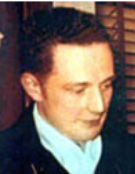
On Saturday, August 17th, at 8:40 p.m., Officers Robert Fossum and Ward Canfield, 35, were chasing a stolen vehicle in south Minneapolis on Lake Street, exchanging shots with the suspects. As they went over 36th Street to Blaisdell Avenue, and down Blaisdell to 39th Street, the suspect vehicle skidded and hit a parked car, locking bumpers and spinning into the middle of the street. As the squad came around the corner, it hit a curb and also spun around. Officers and suspects both got out of their vehicles and began firing at each other at point blank range, the suspects firing high-powered rifles, .38 and .45 caliber pistols and using armor-piercing bullets. Fossum was hit first, then Canfield was wounded in the right pelvis as both officers emptied their guns.
The suspects then got back into their car and started to drive away. As they did so, they drove into Canfield's body, catching him on the bumper and dragging him 20 feet until he came loose. They then drove over him as they sped away. The suspect vehicle, still stuck to the other car, sped down 39th Street where the two cars became unhooked and went out of control at 850 Van Nest Street. The vehicle the suspects had been driving had blood in it, indicating at least one suspect was wounded. The suspects then fled on foot to 39th Street and Nicollet where they took a vehicle driven by a female, pushing her out into the street. After driving south on Nicollet, at 38th Street and First Avenue South, they took another vehicle occupied by Mr. and Mrs. Alvin Anderson, pushing Mr. Anderson out of the vehicle and blindfolding Mrs. Anderson as they drove away. They later threw her out in an alley behind 3325 Columbus Avenue and abandoned the car at 39th Street and Fifth Avenue South.
Canfield's injuries included a shot in the lower abdomen, a crushed chest, a broken collarbone, fractured pelvis, dislocated hip and a broken right knee. Fossum was hit in the head with an armor-piercing bullet.
A month later, on September 14th, Sergeant James Sampson and Deputy Vern Gottwald were driving by Crooked Lake School when they saw a man walking along side of the road carrying a gas can. They offered him a ride and he accepted. But when the man acted nervous, they searched him and handcuffed him. The officers thought maybe he had stolen a car or had hidden something stolen in it, so they obtained the location of the car from him. The suspect directed the officers to stop by a car on the road on Constance Boulevard, just off Crooked Lake Boulevard. They ran a check on the vehicle, which did not come back to the suspect. Seeing another car parked farther up the road, the officers went and checked that one. They exited their car with their guns drawn and used their car doors as cover, but as they did so, a male exited the car and started firing at the officers. Another male then started firing from the back seat of the car and the gun battle was on. Sampson was grazed by a bullet, but was able to continue. When his shotgun jammed, he took the car keys and took cover behind some trees near the road. The officers' gunfire kept the suspects pinned down in a ditch and when Gottwald ran out of ammunition, he ran to a neighboring house to call for help. The suspects then tried to take a shotgun from the squad and start the car; they were unable to steal either one.
Sampson, who had been shot in the ankle with an armor-piercing bullet that shattered the bone, reloaded behind the tree as they suspects ran through a field and toward the Eugene Lindgren residence. With the suspects out of sight, Sampson was then able to crawl to the car to use the squad radio to call for help. Gottwald, who had been unable to contact dispatch by phone, grabbed a shotgun at the house and returned to Sampson.
Lindgren, 30, who had heard the gunshots, went to the garage to get his rifle. As he got to the garage, the suspects arrived at the back of it, took his Cadillac and kidnapped him. Gottwald and Sampson got back in the squad and tried to catch up to the suspects. Since they had radioed for help, Gottwald then decided to take Sampson to Anoka Hospital for treatment. He was later transferred to St. Mary's Hospital.
More than 300 officers converged on the area to search for the suspects. Officers from Anoka, Hennepin, Washington and Wright Counties-Anoka, Minneapolis, New Brighton, Fridley, Champlin, Columbia Heights, and Circle Pines Police Departments, state patrol, and agencies from Wisconsin arrived on the scene. The state patrol airplane arrived and spotted the suspects, they directed officers to a swamp in the Carlos Avery wildlife game farm. Although State Patrolman James Crawford was approximately 25 feet from the suspects, he did not fire because he was afraid he would hit the hostage.
Lindgren stated, "Don't shoot or they will kill me." Just then, one of the suspects put his gun to Lindgren's head and killed him. Crawford ordered them to surrender, but when they didn't, he fired at them with a sawed-off shotgun. One bullet hit one of the suspects in the body, went through him and hit the second one in the head, killing them both. They were identified as Ronald, 24, and Roger 26, O'Kasick. Their brother, James, 20, admitted shooting Canfield and said that Roger had shot Fossum. He stated that running over Canfield was an accident. He was later convicted of murder and sent to the St. Cloud Reformatory on September 15th, 1958, where he committed suicide later that year.
Officer Fossum was 31 years old. He had worked for the Minneapolis Police Department since May 16th, 1951. Three children, John, 8, Joan, 6, Janean, 17 months, and his wife, Dorothy, who was expecting their fourth child in two months, survived him. His funeral was held at Gleason Mortuary and he was buried in Resurrection Cemetery.
Officer Canfield eventually had more than 100 operations due to his injuries. He died on March 2nd, 2000, at the age of 78.
Minneapolis Police Officer Donald McHale

At midnight, Saturday, March 24, Officer Donald McHale left the station to meet his friend, Mason W. Wolke, at the BeeHive Tavern at 1721 East Lake Street. At closing time, they left the bar and walked across the street to the parking lot and Wolke's car. There they were met by two men who hit and robbed Wolke. McHale ran after them and caught them at Lake Street and 17th Avenue South. A fight ensued with suspects and Officer McHale was beaten and pushed through a window at Nolander's Department Store, causing deep cuts to his left leg. Officer McHale climbed out of the window and tried to call for help but collapsed in front of 1709 East Lake Street where he lay for about 20 minutes until help arrived. He was taken to General Hospital at 2:07 a.m. and died at 3:50 a.m. from loss of blood.
The Grand Jury did not indict the four suspects as they could not find enough evidence.
Officer McHale died at the age of 36. He had been with the Minneapolis Police Department since February 1st, 1948. His brother, James, was also a detective with the department. He was survived by his wife, Virginia, and five children: Donna Mae, 9, Patrick, 7, Mary, 4, Catherine, 2, and George, 8 months. His funeral was held on Wednesday, March 28th at Annunciation Catholic Church and he was buried in Fort Snelling National Cemetery.
